My Story:
Stepping into Adult Care - Alice
From Timaru

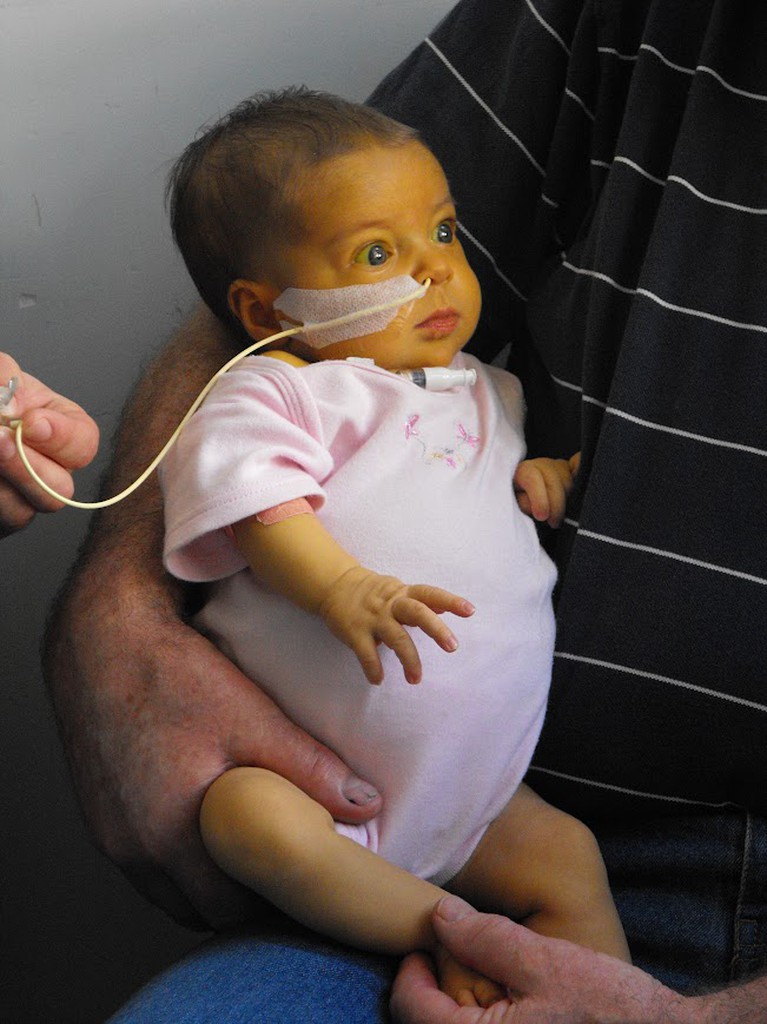

Alice was born on 25 May 2009 after a normal pregnancy. When she was three weeks old, I noticed she had become jaundiced. Her stools were unusually pale, and her urine had a rusty red colour. Concerned, I rang my midwife and shared my observations. She advised me to take Alice to Timaru Hospital immediately.
At the hospital, a blood test was done, and I was told Alice needed to be transferred to Christchurch Hospital for further testing. My husband, Mike, and I were informed it could be one of several conditions—none of which we had ever heard of before. It was overwhelming and frightening, but it did explain why Alice always seemed hungry and was filling her nappies so often.
We later learned that Alice’s liver was unable to break down my breast milk or absorb its nutrients. Instead, it was passing straight through her system without giving her the nourishment she needed.
The following day, Mike and I took Alice to Christchurch, leaving her two-year-old sister, Hazel, in the care of her grandparents. After a week of tests and anxious waiting, we finally received a diagnosis: Alice had Biliary Atresia—a rare condition in which the bile duct is blocked or absent. Without a clear path for bile to drain into the intestine, it instead builds up in the liver, causing irreversible damage. This condition affects approximately 1 in 20,000 births.
When Alice was just five weeks old, she underwent her first operation, known as the Kasai procedure. The aim was to create a new pathway for bile drainage by attaching a section of her intestine directly to her liver. We spent just over two weeks at Starship Hospital before being transferred to Christchurch Hospital for another week of recovery and care.
One-third of Kasai operations are successful, another third work temporarily—buying time for the child to grow before the procedure fails—and the remaining third fail immediately. Unfortunately, Alice was in that last group.
We had only been home for eight days when I noticed her tummy looked unusually large. Concerned, I took her to our family doctor, who immediately sent us back to Christchurch Hospital. We spent three weeks there before being transferred once again to Starship Hospital—this time for a liver transplant assessment.
This was news we were neither expecting nor wanting to hear. Looking back, I can see now that I was in shock, moving through each day on autopilot, simply doing what needed to be done for Alice.
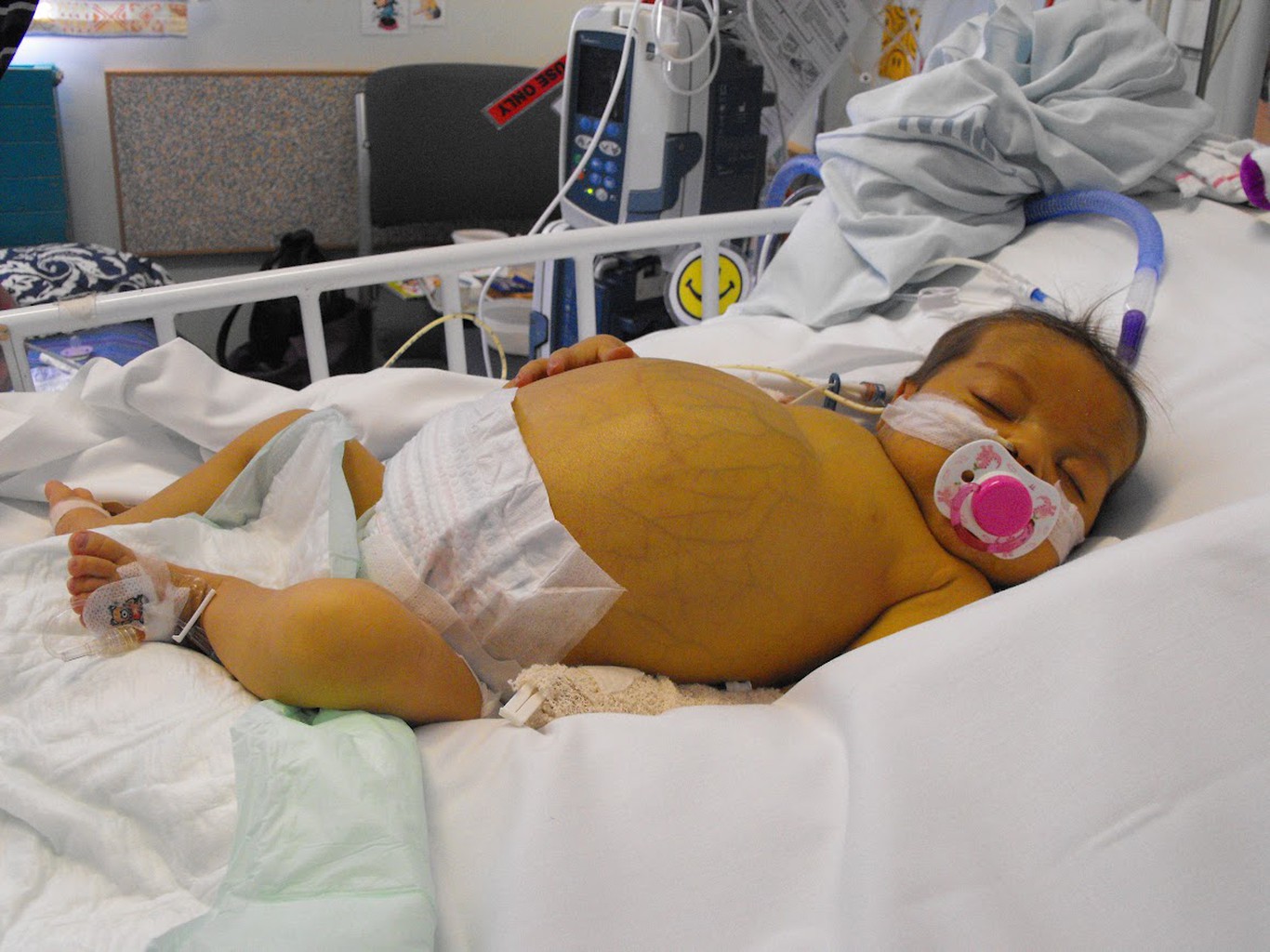
We arrived at Starship Hospital in mid-August, when Alice was not quite three months old. Sadly, she began to deteriorate quickly. Her bilirubin levels rose each day, turning her skin, the whites of her eyes, and even her tears a deep yellow. Normal bilirubin levels range from 3 to 30; by the time she went to transplant, Alice’s had reached the 700s.
Her tummy filled with fluid (ascites), another side effect of liver disease. The swelling became so severe that it made breathing difficult, as her enlarged abdomen squashed her lungs. She was given regular albumin transfusions to try to keep the fluid within her blood vessels.
Liver disease also increases blood flow through the body because the damaged liver can’t cope with its usual workload. This led to several complications for Alice. Her spleen became enlarged, consuming more blood cells than normal and requiring regular blood transfusions. She also developed varices—swollen veins—at the top of her oesophagus. These weak veins struggled under the pressure of the increased blood flow and could have burst, causing life-threatening bleeding.
Soon after our arrival in August, an NG (nasogastric) tube was inserted into Alice’s nose because she could no longer drink enough formula from her bottle. At first, it was used to ‘top up’ her feeds, but by September she was on continuous pump feeds, receiving a special pre-transplant formula in small, steady amounts her body could handle. By early October, Alice had to be put on TPN (total parenteral nutrition), as her body could no longer tolerate any milk at all.
As you can imagine, Alice was not sleeping well. Mike and I stayed on alternate nights at the hospital with her, passing each other like ships in the night. Some nights we were lucky to get even two hours of sleep between us. It was exhausting and, at times, deeply despairing.
What helped us through was the incredible support of our family. Both sets of grandparents travelled up whenever they could, sometimes staying at the hospital so Mike and I could have the rare luxury of a night together. Hazel spent most of her time in my parents’ care. They brought her to Auckland many times to visit, but being apart was hard on all of us.
In September, the doctors asked us to compile a list of at least ten possible live donors for Alice. Mike, my husband and Alice’s dad, was the first name on that list. He underwent a series of tests throughout the month, and—thankfully—passed them all. He was officially lined up to be her donor.
Alice’s liver transplant was scheduled for Tuesday, 20 October, but she had other plans. By Thursday, 15 October, her condition had deteriorated so rapidly that doctors decided the surgery had to be brought forward. She had less than 48 hours to live.
On Saturday, 17 October, Mike was taken into theatre at 8 a.m., followed by Alice at 10 a.m. Mike’s operation lasted five hours; Alice’s took twelve. At just four-and-a-half months old, she was the youngest patient the transplant team had ever operated on—but they did an extraordinary job, and the transplant was a success.
Her recovery, however, was not without complications. Two days after the transplant, Alice’s hepatic artery stopped working, requiring another five-hour operation to try to save her new liver. After ten days in PICU, she was finally moved to the general ward, and two weeks later, we were able to stay together in a room at Ronald McDonald House.
During the three months following her transplant—when we remained in Auckland—Alice faced several setbacks, including biliary strictures that required further hospital stays.
At the end of January 2010, when Alice was eight months old, she was finally cleared to go home to Temuka. But just three weeks later, she was airlifted back to Starship with metabolic acidosis, leading to another six-week stay in Auckland. On 30 March, at ten months old, Alice was cleared to go home again.
That first year post-transplant was not without its hiccups. We made several last-minute trips to Auckland whenever her blood tests showed abnormalities, and the team needed to see her in person. But over time, those urgent calls became fewer and farther between.
Despite such a rocky start to life, Alice has been thriving. Since she turned one, the only time she’s spent a night in hospital has been for her five-yearly check-ups. She handled COVID better than her dad and I did, and hardly ever gets sick. Her medications haven’t changed since she was a toddler, and her three-monthly blood tests are always perfect.
Alice is now sixteen and lives life to the fullest. She’s nonchalant about her transplant—it doesn’t define her. In fact, she often forgets to even mention it, even in situations where it might be relevant. She manages her own pill box on the kitchen bench, takes her medication without reminders, and refills her supplies on her own.
She’s also embraced opportunities far beyond home. In 2023, she travelled to America with the Koru Club, creating lifelong memories at Disneyland, Universal Studios, and other adventures. This year, she spent three weeks in Japan as part of a sister city exchange programme between Timaru and Eniwa. Talented in art and hardworking at school, she has her sights set on a career in the medical profession.
Earlier this year, Alice and I flew to Auckland to meet with a combination of paediatric and adult liver specialists—the first step in her transition to adult services. She took it all in her stride. When I asked if she felt nervous about the change, she shrugged and said, “At the end of the day, everyone is there to help me, and with my family’s support, I know I’ll be just fine.” To her, there’s nothing to fear, because in her liver transplant experience, everyone has been helpful and kind. I am confident that the next step in Alice’s journey will be a smooth transition to adult care, where she will continue to thrive and take control of her own health.
Kate Manson (mum) with input and approval from Alice Johnston 16