
Immunology News - Immunoglobulin replacement therapy (IRT)
Wed Aug. 26th 2026
The immune system produces immunoglobulins (antibodies) to fight a specific infection. The immune system produces different types of antibodies to combat various kinds of germs, thereby preventing us from getting sick.
Antibodies are an essential part of the body’s defence against both bacteria and viruses. In most PIDs, the body fails to produce enough antibodies or produces none.
Immunoglobulin replacement therapy (IRT) is the treatment given to most people with Primary Immunodeficiencies (PID). This replaces their antibody levels, allowing them to fight viruses and infections more effectively.
Immunoglobulin used in IRT comes from blood donated by healthy blood donors. The protection provided by the IRT can be described as a blanket over the immune system of a person with PID, offering protection from infections. IRT is a treatment, but not a cure. Patients need to have it on an ongoing basis, as antibodies need to be replaced regularly.
There are two primary forms of IRT, named according to how they are administered:
Intravenous Immunoglobulin (IVIg)
Given intravenously through a vein into the blood
Most often given in a hospital day unit by a Registered Nurse or Doctor
Most people have IVIg every 3 to 4 weeks. The dose is calculated based on the person’s weight and immunoglobulin levels, as well as their response to IRT.
Subcutaneous Immunoglobulin (SCIg)
Slowly infusing concentrated immunoglobulin under the skin
Can be done at home by the person with the PID, or by their carer, after being trained in the process by a nurse or doctor
Usually given weekly, depending on the dose, immunoglobulin levels, and how well the person is.
IDFNZ
Since its formation in 1989, IDFNZ has lobbied for PID patients to have access to IRT treatment, and in recent years, also for access to their choice of SCIg or IVIG. It is crucial that patients can select the method that best suits their lifestyle and circumstances for the best quality of life.
There is also a range of IRT products available. We also recognise that hospitals often prescribe the manual syringe method for SCIg due to the high cost of pumps. This method can present difficulties for patients on a higher dose or those with dexterity problems.
In response, IDFNZ can provide several solutions to patient members:
* IDFNZ identified and promoted a simple, affordable, mechanical Spring fuser pump, which IDFNZ can provide free of cost to PID patients in conjunction with their immunology team.
*Alternatively, we have a supply of electronic Bodyguard pumps for those preferring a more automated method of infusion.
*In addition, one of our patient members using the manual syringe method has recently designed a simple device to assist patients who are happy with this method but require help in applying pressure. Anyone interested in trialling this device, please contact the IDFNZ support team.
For mechanical and electric IRT pumps, the equipment can be supplied by IDFNZ upon request from your immunology team. The hospital staff will calibrate your equipment and provide training on its use.
Other FREE equipment and services available from IDFNZ include:
*Cooler bags for transporting IRT products.
*Courier tickets to deliver consumables from the hospital team to the patient's home.
*medical fridges for medicines and IRT products.
* A range of booklets and pamphlets explaining IRT therapy
* Patient stories featuring examples of PID members on IRT Treatment.
* Medical diaries to track treatments and issues.
Contact the IDFNZ support team via office@idfnz.org.nz for more information.
For more information on specific plasma products available in New Zealand, visit https://www.nzblood.co.nz/pati....
New Resources

This new publication completes our range of free information books, covering PID and Transplant conditions, and all stages of life.

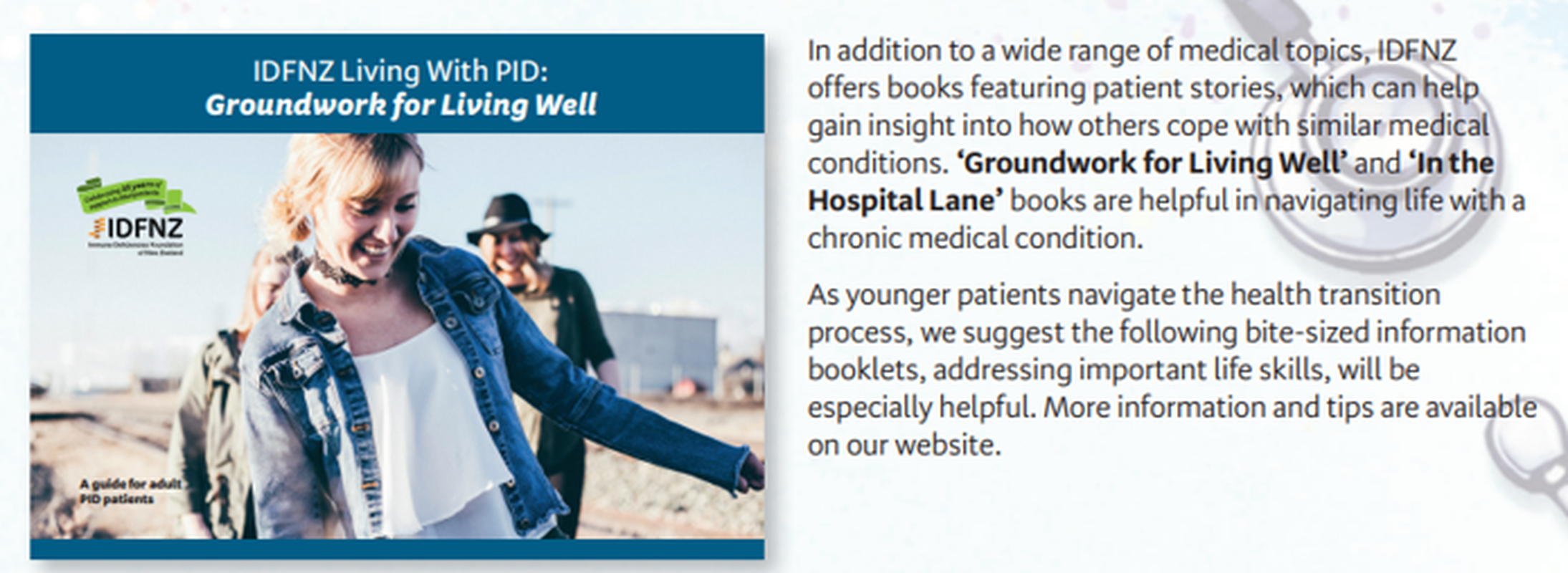
Along with the new transition book, we have also published information pamphlets written for teenage patients.
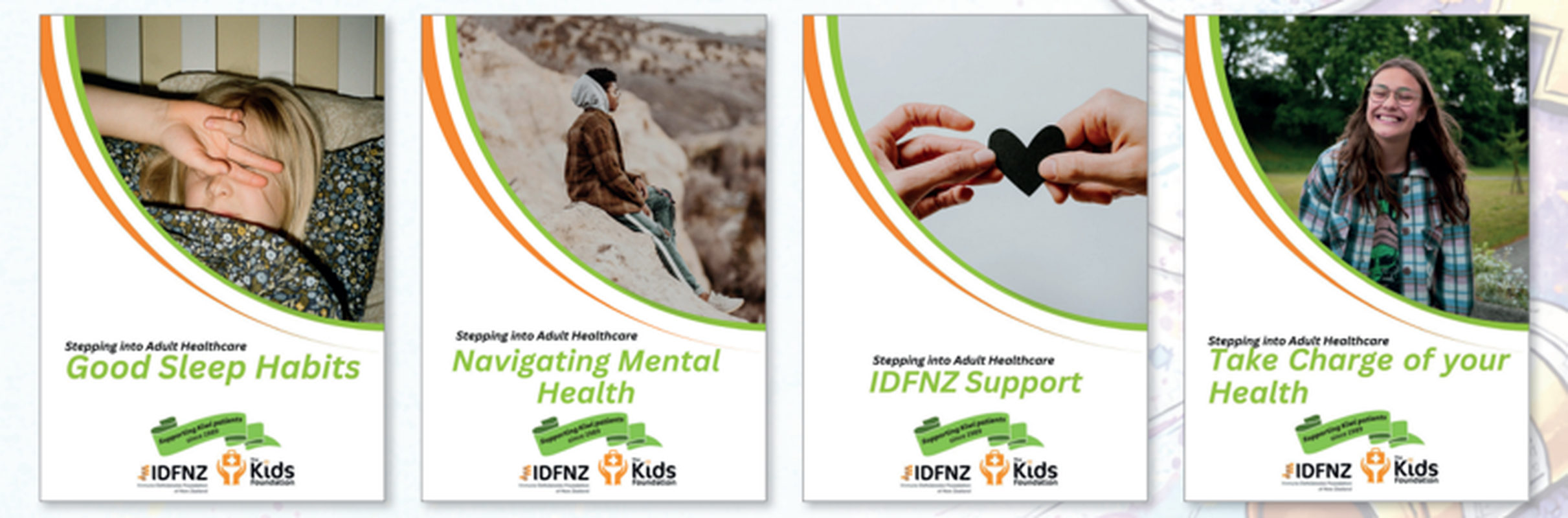
Contact IDFNZ support services for copies of these and other free resources. Let us know when teenage patients transition to adult services so we can also update your membership to IDFNZ.