Immunology News - June 2026
Mon June 8th 2026

Congratulations to Professor Rohan Ameratunga on his recent election to the Royal Society of NZ in recognition of his global contributions to the study of genetic immune disorders.
Professor Ameratunga is the current Chairman of the New Zealand Clinical Immunology and Allergy Group (NZCIAG. He is also a past Vice Chairman of IDFNZ.
Professor Rohan Ameratunga, Auckland Hospital : Elected for pioneering discoveries on genetic disorders of the immune system
Professor Rohan Ameratunga ONZM FRCP FRCPCH FRCPATH FRACP FRCPA is an outstanding clinical scientist and paediatric and adult immunologist who has specialised in primary immunodeficiencies, which are rare genetic disorders that impair the immune system from birth and make it hard for the body to fight infections. He has identified several new immune disorders, demonstrated how their courses can vary among patients, and developed diagnostic criteria now used internationally. He established the world’s first customised genetic testing service for primary immunodeficiency, a de facto national paediatric immunology service, and an adult immunology service in Auckland to improve patient care in Aotearoa New Zealand.
Being made a Fellow of the Royal Society is an honour that recognises distinction in research, scholarship, or the advancement of knowledge at the highest international standards. Fellows can use the post-nominal ‘FRSNZ’ after their name to indicate this honour.
Elected for pioneering discoveries on genetic disorders of the immune system, Rohan is one of only 21 new fellows announced in 2026. Fellowship recognises researchers, scholars, and innovators throughout Aotearoa New Zealand who have achieved excellence in their various disciplines across science, technology, and the humanities.
Professor Ameratunga is also the current Chair of the New Zealand Clinical Immunology and Allergy Group (NZCIAG). This group includes all immunology specialists in New Zealand who collaborate with IDFNZ to improve patient services. Current projects IDFNZ supports include establishing a national service for adult PID patients, documenting pathways for BMT transplantation in the main centres, and formalising transition processes for the transition from Child to adult care.
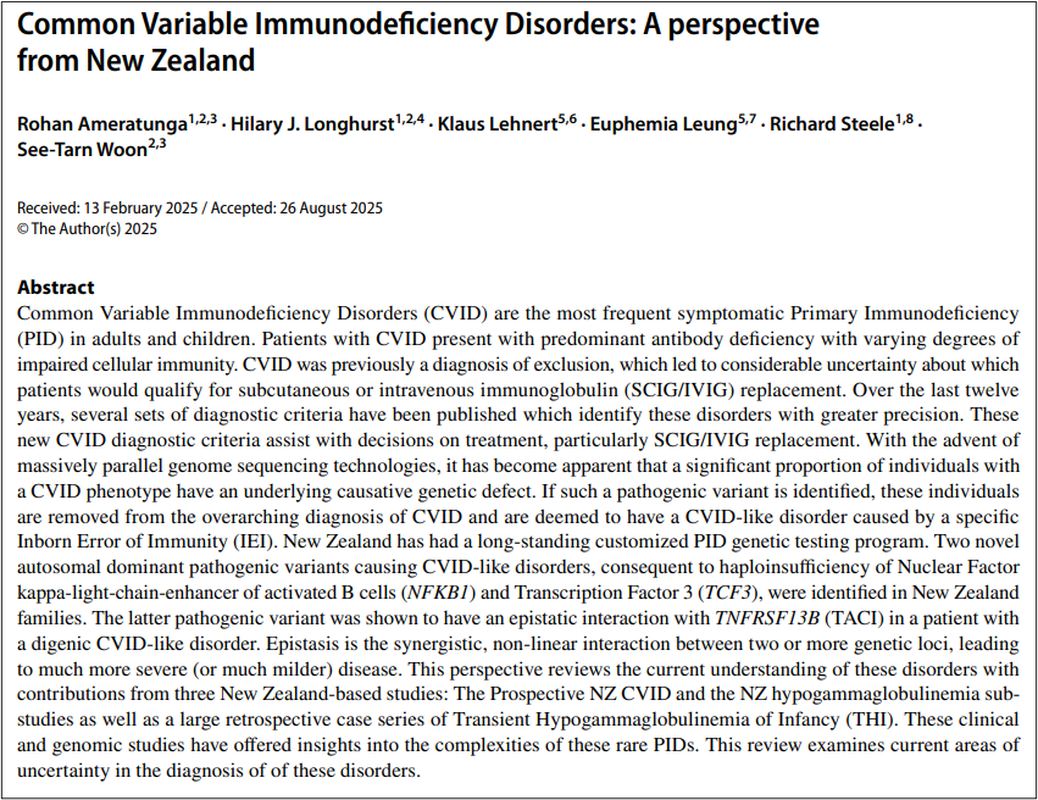
Professor Ameratunga and colleagues have recently published a paper summarising 12 years of research and clinical experience of treatment of Common Variable Immune Conditions (CVID).